A dramatic political clash has erupted between former President Barack Obama and President Donald Trump, with competing claims about rally attendance becoming another flashpoint in an increasingly heated midterm campaign.
Obama’s Cleveland Campaign Rally
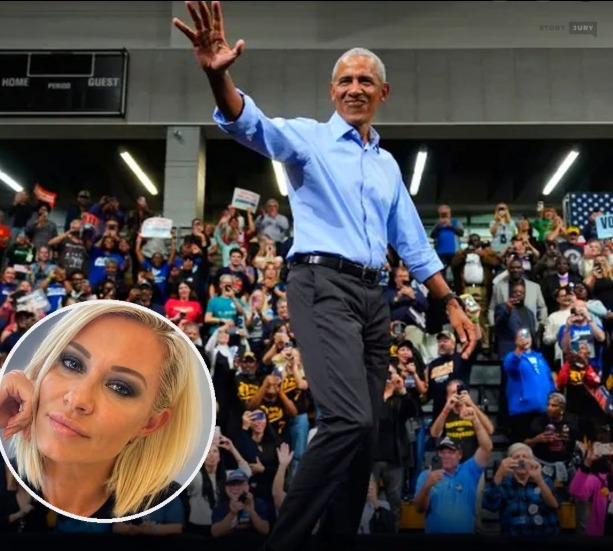
Obama returned to the campaign trail on October 24, drawing thousands of supporters to Cleveland, Ohio, where he rallied behind Democratic gubernatorial nominee Amy Acton and Senate candidate Sherrod Brown.
The event attracted substantial attention, with supporters reportedly lining up hours before the doors opened. Inside Cleveland Public Auditorium, the crowd filled the venue as Democrats gathered ahead of the November 3 midterm elections.

Obama used the occasion to deliver a sharp assessment of Trump’s presidency, accusing the administration of chaos, cruelty, corruption, and incompetence. His remarks drew enthusiastic reactions from an audience eager to hear his political message.
The former president also criticized Trump’s focus on White House renovations, using humor to challenge the priorities of the current administration. His jokes prompted laughter and applause, creating memorable moments for supporters and television audiences.
Trump Questions Obama’s Crowd Size
But the political confrontation extended beyond policy disagreements. Crowd size became a central talking point after Trump questioned the attendance at Obama’s recent Michigan event during a rally in Perry, Georgia.
Trump claimed that Obama’s venue had been empty, a description that was challenged by reporting from the events. Coverage of Obama’s campaign appearances described well-attended gatherings, contradicting the suggestion that supporters had failed to show up.

The dispute quickly became a broader argument over political momentum. For both parties, enthusiastic crowds offer powerful images of public engagement, particularly in the final days before a closely watched election.
Obama’s appearances are intended to help Democrats energize their supporters and strengthen candidates competing in difficult races. His popularity among many Democratic voters gives the party a recognizable figure capable of attracting attention to local campaigns.
Rally Attendance and Campaign Strategy
Trump, meanwhile, has continued holding rallies across the country to encourage Republican turnout. He frequently highlights attendance figures as evidence of his political strength, making crowd comparisons a recurring feature of the campaign.
However, rally attendance is difficult to compare without consistent measurements. Different venues, security arrangements, event formats, and local political conditions can produce substantially different crowds, even when candidates attract similar levels of support.
Recent reporting has described uneven attendance at Trump’s events, including some rallies with empty sections and others that reached capacity. Those observations have intensified scrutiny of his claims about enormous audiences gathering inside and outside venues.
The contrast has created an uncomfortable political narrative for Trump’s opponents to exploit. Images of packed auditoriums can challenge claims that Democratic enthusiasm is fading, although photographs alone cannot establish which candidate has stronger nationwide support.
Obama’s Campaign Message
Obama’s message in Cleveland focused on economic pressures, political accountability, and the importance of voting. He argued that the midterms offered voters an opportunity to push back against policies they oppose.
He also endorsed Sherrod Brown’s campaign and Amy Acton’s bid for governor, presenting both candidates as advocates for working families. Their campaigns are taking place in a state where Republicans have enjoyed significant electoral strength in recent presidential contests.

For Democrats, the challenge is turning rally enthusiasm into ballots. A large crowd can generate headlines and energize volunteers, but success ultimately depends on voter registration, turnout, campaign organization, and support across the electorate.
Republicans have their own reasons to question whether Trump’s rallies will translate into victories. National attention does not automatically resolve local concerns about prices, employment, healthcare, or the performance of individual candidates.
The Battle for Political Narrative
The crowd-size controversy also illustrates how political campaigns increasingly compete through images and short video clips. A packed room, an empty section, or a cheering audience can quickly become a viral talking point, sometimes without the full context.
Neither side can conclusively claim national dominance based on a handful of campaign events. Reliable comparisons would require verified attendance figures across multiple rallies, alongside polling and election results that measure broader public opinion.
Still, Obama’s well-attended appearance in Cleveland delivered a strong visual moment for Democrats at a crucial stage of the campaign. It also gave the former president another opportunity to challenge Trump’s record before a national audience.
With Election Day approaching, the rivalry is likely to remain intense. Every rally, applause line, and disputed attendance claim may become ammunition in a political contest where both parties are fighting to shape the public narrative.
The central question is whether the enthusiasm seen at Obama’s events will translate into Democratic victories—or whether Trump’s campaign appearances will motivate enough Republican voters to counter that momentum. The election results, rather than crowd-size boasts, will provide the clearest answer.